
 EN
EN  Romana
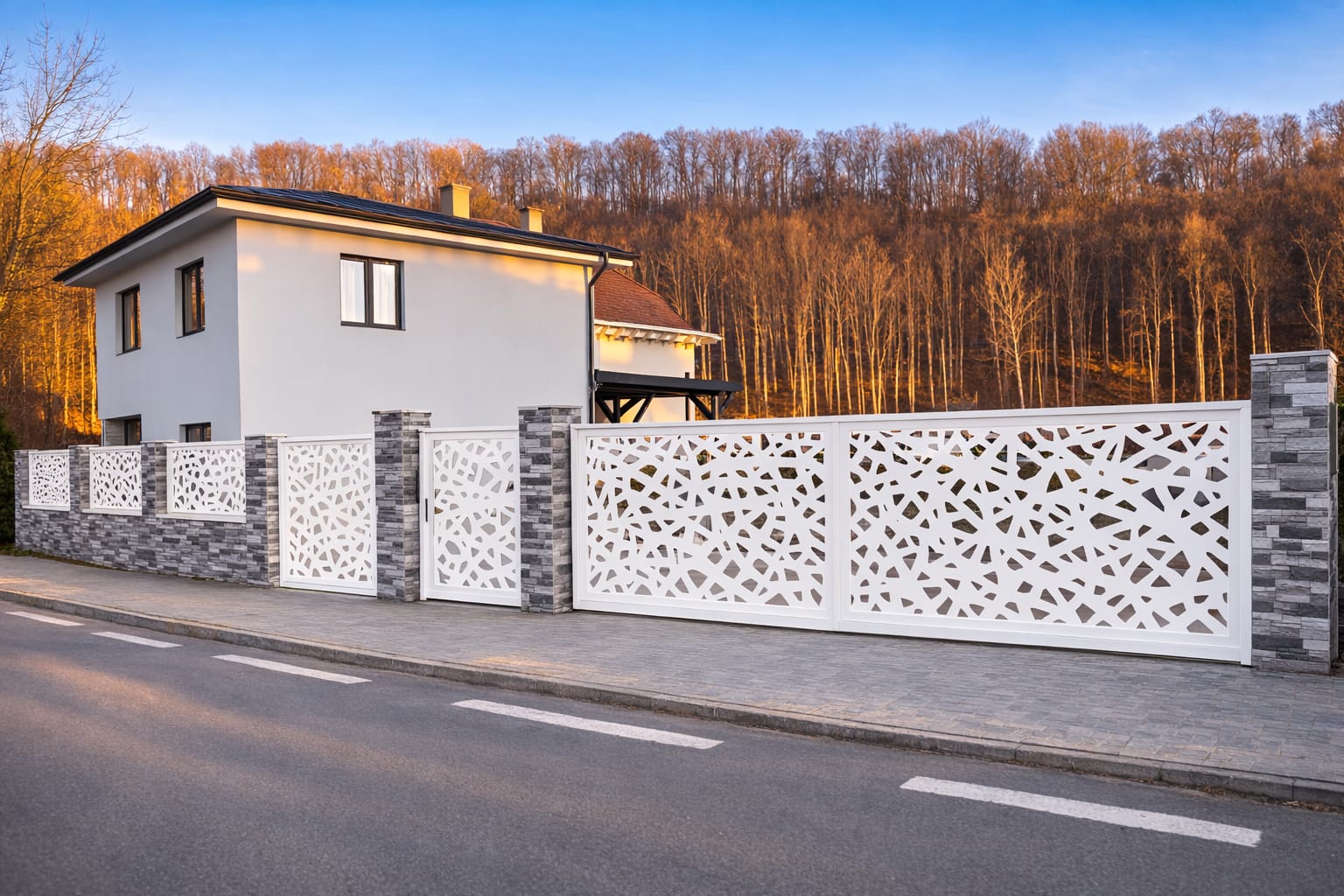
Creating a metal fence is not just about technical execution; it is a complete process that begins with an idea and ends with a functional and aesthetically pleasing product, seamlessly integrated into the architecture of the home.
In this article, we present the stages of a recent project: a modern metal fence made from 2 mm steel, powder-coated in RAL 9016 White, complete with a pedestrian gate and sliding driveway gate.
1. Preliminary Discussions with the Client
The project began with a detailed discussion in which the client already had a clear direction in mind: two fence designs they liked and were considering.
Our role was to analyze these options and adapt them to the existing structure, including the stone-clad pillars and the sliding gate opening. We discussed the advantages of each design from both an aesthetic and practical perspective, ensuring that the final choice was balanced and well suited to the project.
2. Choosing the Design
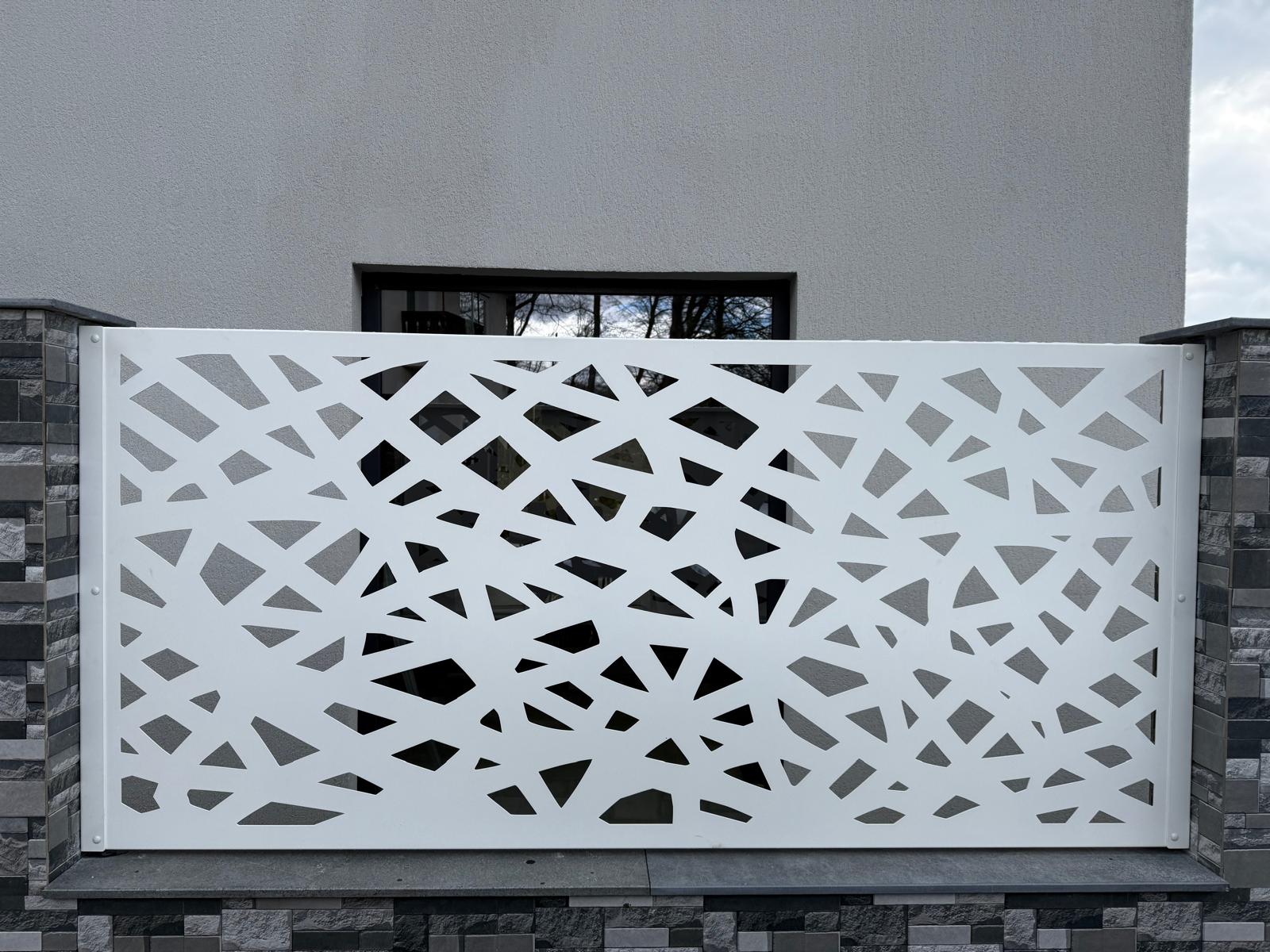
Starting from the two options proposed by the client, the final concept evolved into a design featuring panels with irregular geometric cut-outs.
This type of pattern creates a modern, dynamic appearance that enhances the overall character of the property.
The panels are made from 2 mm thick steel sheet, providing:
- excellent rigidity and long-term durability;
- precision in creating the decorative cut-outs;
- a clean, well-defined final appearance.
3. Technical Design and Drawings
Once the final design was established, we moved on to the technical stage:
- precise sizing of each panel;
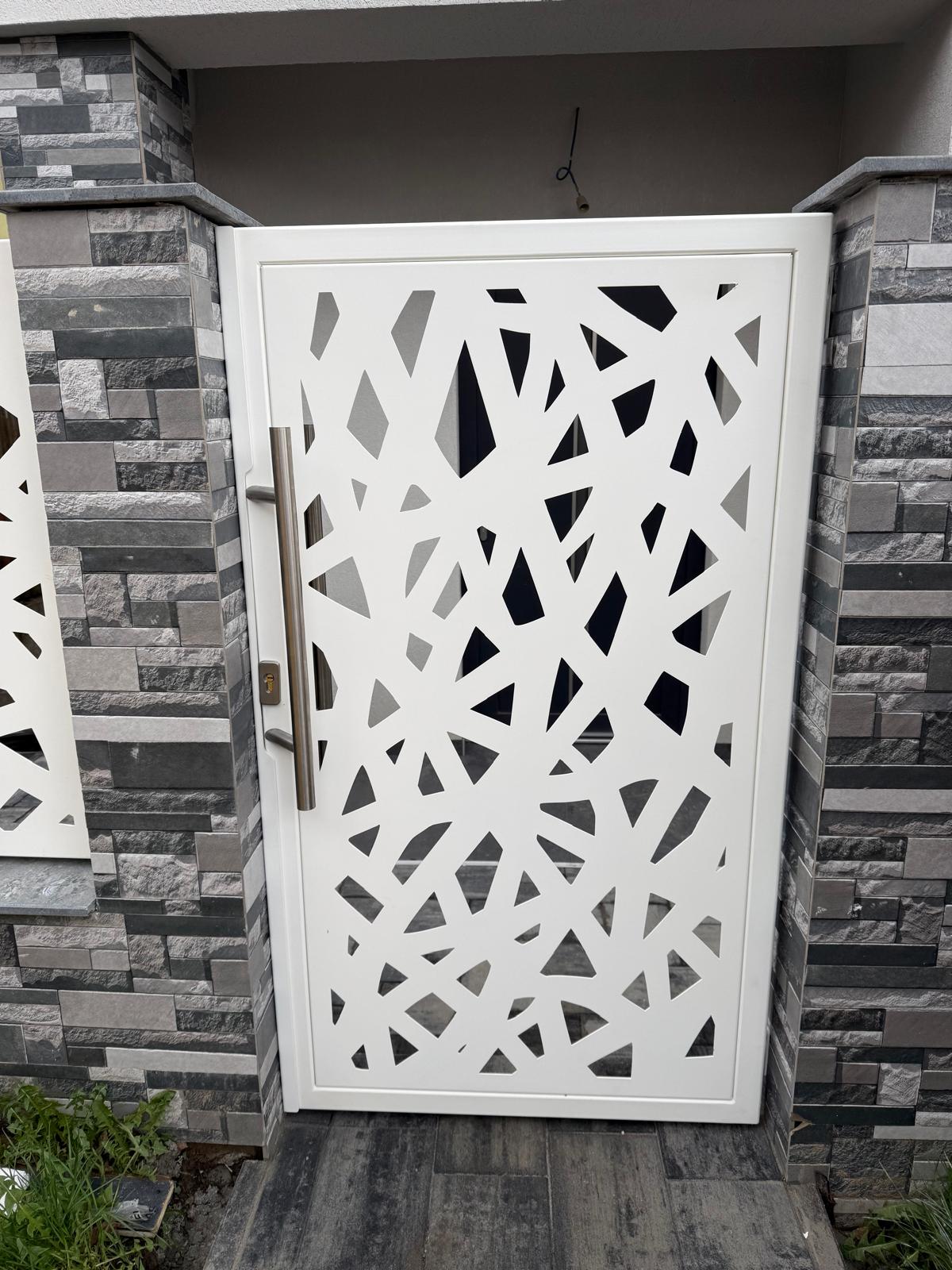
- integration of the pedestrian gate into the overall design;
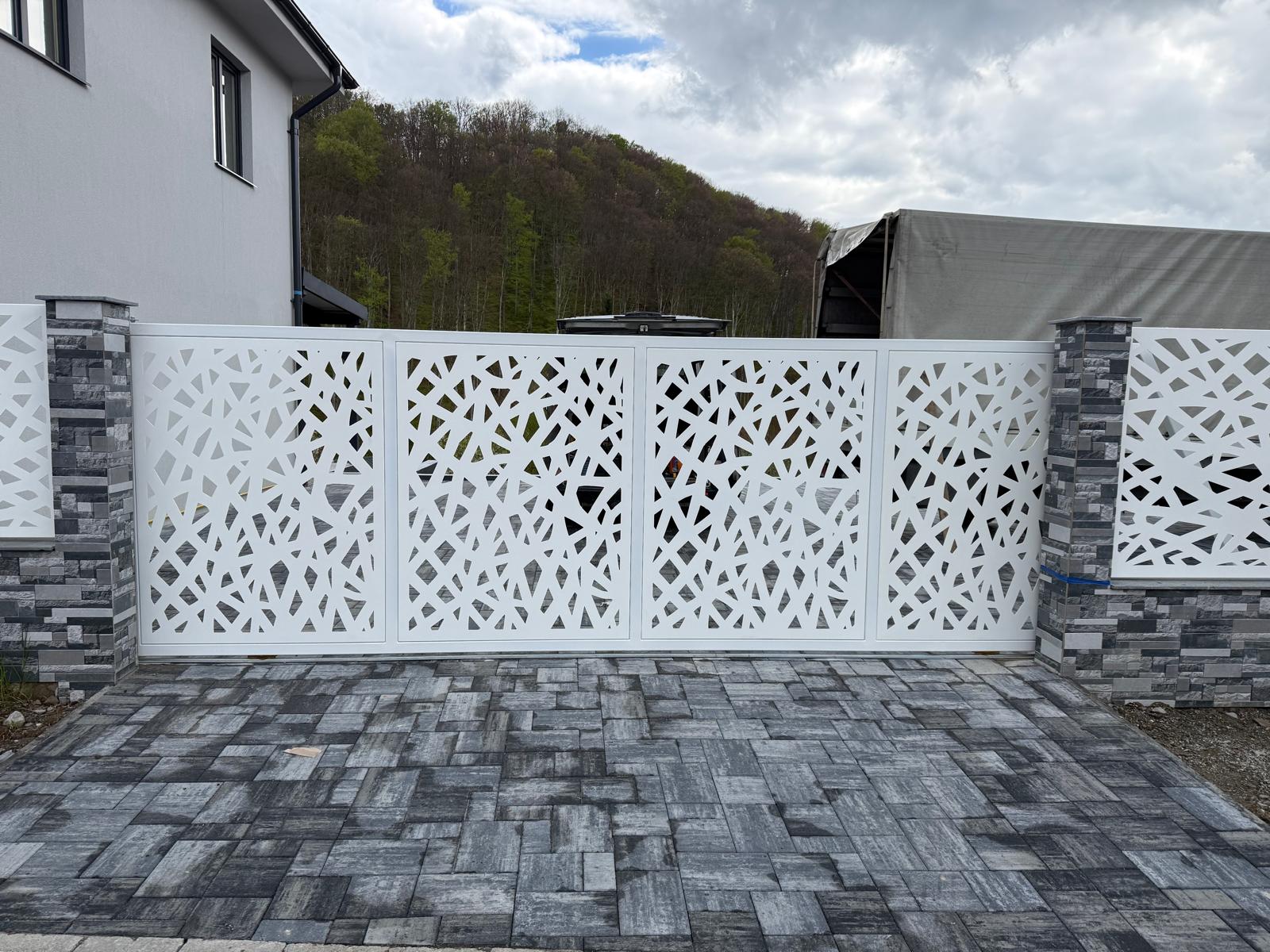
- design of the sliding gate system for vehicle access.
The technical drawings played an essential role throughout the project, serving not only as a visual reference but also as the precise foundation for manufacturing.
They contributed to:
- Manufacturing precision – each panel was dimensioned down to the millimeter, including the positioning and proportions of the cut-outs, ensuring a consistent pattern across the entire length of the fence.
- Coordination of all components – the pedestrian gate, fixed panels, and sliding gate were designed as one cohesive system, allowing the pattern to continue naturally without visual interruptions or mismatched elements.
- Integration with the existing structure – the exact distances between pillars, actual on-site measurements, and potential deviations were taken into account to minimize the need for adjustments during installation.
- Correct operation of the sliding gate – the movement path, sliding system, and required clearances were carefully defined to prevent interference or obstruction during operation.
4. Manufacturing
The panels were precision laser-cut to accurately reproduce the selected design. Afterwards:
- the structure was prepared and finished;
- a two-layer electrostatic powder coating system was applied in RAL 9016 White.
This type of finish provides:
- resistance to weather conditions;
- corrosion protection;
- a uniform and durable finish.
5. Installation
Installation was the final stage, bringing all the elements of the project together:
- fixing the panels between the existing pillars;
- installing the pedestrian gate, equipped with a Spatium handle;
- installing the sliding driveway gate for vehicle access.
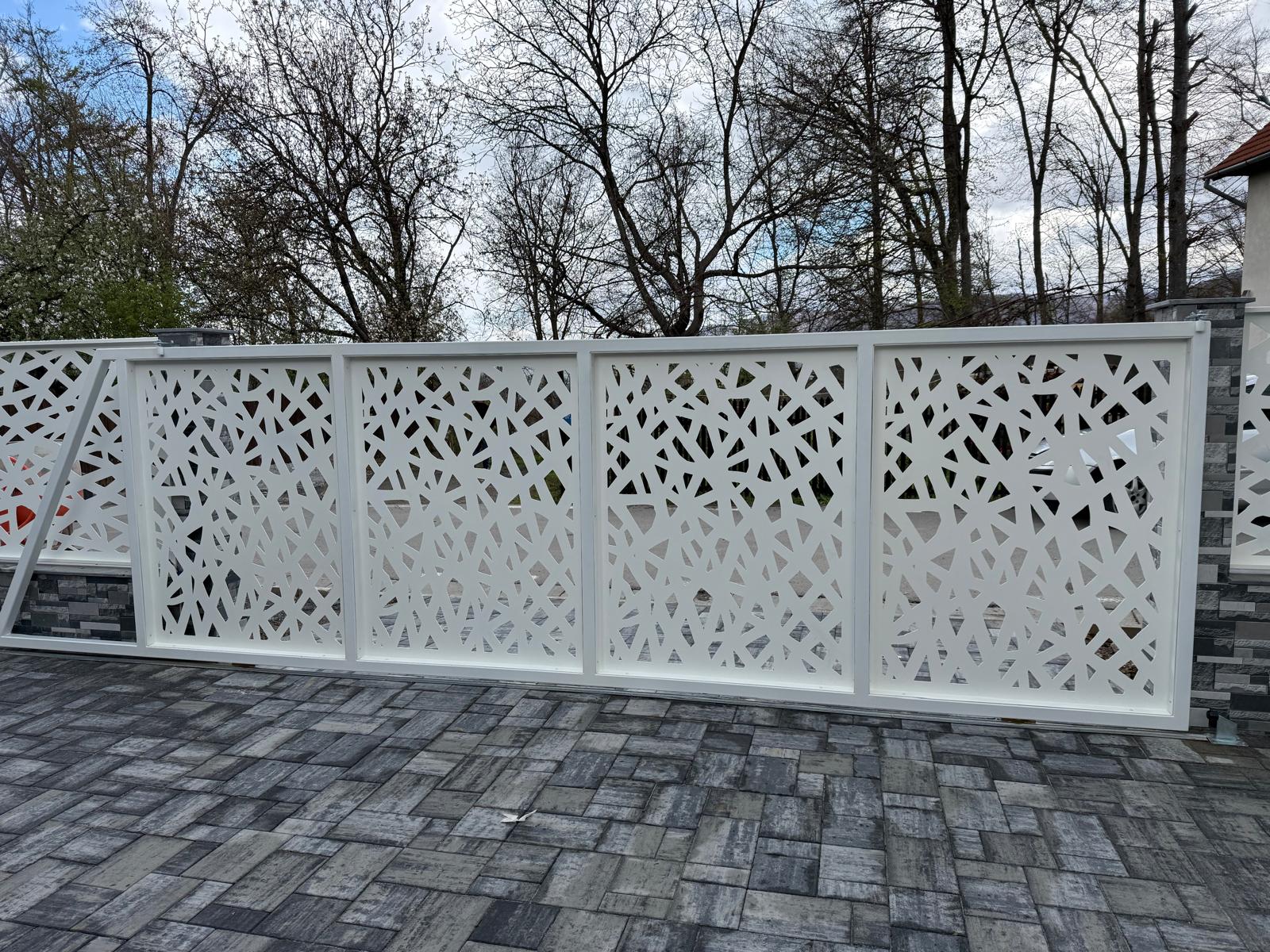
A well-crafted fence is more than just a property boundary – it is a defining feature of the home. Through close collaboration with the client, detailed planning, and high-quality craftsmanship, the result can perfectly combine design, durability, and functionality.